Powered by Blogger.

Mesothelioma Symptoms

google.com, pub-5877111316406693, DIRECT, f08c47fec0942fa0
Mesothelioma Symptoms - Mesothelioma presents very few early symptoms in patients, and late stage symptoms can sometimes mirror non life-threatening conditions.

Overview Mesothelioma Symptoms.
Patients with mesothelioma experience a variety of symptoms that vary by type and stage of the cancer. Symptoms can be caused by irritation or fluid build-up in the lungs or stomach caused by the cancer growth. Although mesothelioma is rare, anyone displaying these symptoms should see a doctor immediately, especially if they have been exposed to asbestos in the past.

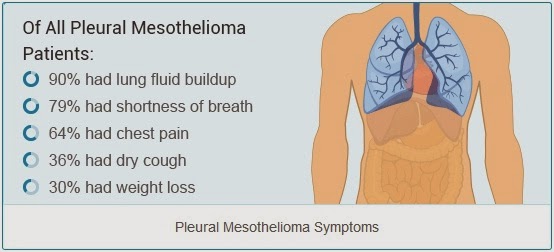
Pleural MesotheliomaPleural Mesothelioma  The most common symptoms for pleural mesothelioma are chest pain, pleural effusions (fluid build-up), painful breathing, and a persistent cough.


Peritoneal Mesothelioma  
Peritoneal Mesothelioma
The most common symptoms for peritoneal mesothelioma are stomach pains, ascites (fluid build-up), unexplained weight loss, and loss of appetite.

Pericardial Mesothelioma

  
Pericardial Mesothelioma
The most common symptoms for pericardial mesothelioma are chest pains, pericardial effusion (fluid build-up), and heart murmurs. 


Pleural Mesothelioma Symptoms
Pleural mesothelioma is caused by inhaling asbestos fibers, which become trapped in the lining of the lungs, known as the pleura. These microscopic fibers cause irritation and inflammation in the pleura. This inflammation causes thickening in the layers of the pleura and the buildup of fluid around the lungs (pleural effusion). The buildup of fluid and thickening of the lining surrounding the lungs prevents the lung from fully expanding. This causes chest discomfort and painful breathing.

Pleural Mesothelioma Symptoms

Early Stage Pleural Mesothelioma Symptoms (Stage 1 & 2)
Patients with early stages of pleural mesothelioma do not exhibit many symptoms, and those that do show are not specific to the disease. Symptoms common in the early stages of this disease are shortness of breath (dyspnea), chest pain, and persistent coughing. These are similar to symptoms of various other disorders, such as pneumonia, common cold, asthma, influenza, and Chronic Obstructive Pulmonary Disease (COPD). Pleural effusions and inflammation in the lining of the lungs are the main source of discomfort associated with mesothelioma, but are also linked to pneumonia and COPD. Up to 25% of patients have symptoms like dyspnea and chest pain for approximately 6 months before seeing a doctor.

Pleural thickening is another result of pleural mesothelioma that is common in other diseases. This is the caused by the scarring of the pleura. It causes a loss of elasticity in the lungs, which is essential for the lung to expand for normal breathing. Pleural thickening can also be caused by tuberculosis, pleurisy, and empyema (infection in the lung that causes a buildup of pus in the pleura). However, in mesothelioma, this is specifically caused by scarring of the pleura due to asbestos.

Other less common symptoms that may be evident in early stages are fatigue, unexplained weight loss, fever, body aches, and lumps under the skin on the chest.


Late Stage Pleural Mesothelioma Symptoms (Stage 3 & 4)
Late stages of pleural mesothelioma have more specific symptoms, but also include symptoms from the earlier stages. In stages 3 and 4, symptoms still include difficulty breathing, chest pains, and coughing, but these symptoms may be more severe. However, symptoms specific to pleural mesothelioma begin to emerge in these stages. This is when most patients are diagnosed. These symptoms may include:
  •     Fever and/or Night Sweats
  •     Shortness of Breath (dyspnea)
  •     Painful Breathing
  •     Fatigue
  •     Anemia
  •     Persistent Pain in the Chest or Rib Region
  •     Persistent Coughing
  •     Coughing up Blood (Hemoptysis)
  •     Difficulty Swallowing (Dysphagia)
  •     Pleural Effusions
During these stages, treatments may be used to relieve pain and discomfort associated with various symptoms. For example, doctors may drain pleural effusions to reduce chest pain and make breathing easier.

Peritoneal Mesothelioma Symptoms
Peritoneal mesothelioma shares some symptoms with pleural mesothelioma, such as fatigue and unexplained weight loss. However, there are considerably fewer cases compared to pleural mesothelioma. Peritoneal mesothelioma does not have an accepted stage classification system, so the time symptoms occur varies with each patient.

Peritoneal Mesothelioma Symptoms


Pleural Mesothelioma Misdiagnosis
Misdiagnoses are common because symptoms are not unique to pleural mesothelioma. These cases are often misdiagnosed as influenza or pneumonia in the earlier stages. Chest pain and shortness of breath are very common in the early stages of the disease, and up to a third of patients have experienced shortness of breath without chest pain. Some patients reported the chest pain they experienced was dull and insignificant.

Overall, symptoms of pleural mesothelioma vary by stage and are contingent upon the patient. Some patients show virtually no symptoms until the late stages of mesothelioma, whereas some experience symptoms in Stage 1.

Peritoneal Mesothelioma Misdiagnosis
Misdiagnosis of peritoneal mesothelioma is also common. There are similar reasons for misdiagnosis as there are with pleural mesothelioma. That is, non-specific symptoms and the rarity of mesothelioma. Peritoneal mesothelioma is often misdiagnosed as a hernia or Irritable Bowel Syndrome (IBS).


Pericardial Mesothelioma Symptoms

Pericardial mesothelioma makes up less than 1% of mesothelioma cases, and the exact origin of the disease is unknown. Symptoms associated with pericardial mesothelioma are:
  •     Chest Pain
  •     Pericardial Thickening
  •     Irregular Heartbeats
  •     Cardiac Tamponade (Bleeding in the Pericardium)
  •     Dyspnea (Difficulty Breathing)
  •     Pericardial Effusion (Fluid Buildup)
Misdiagnosis of pericardial mesothelioma is common because the symptoms associated with the cancer are so general. The most common misdiagnoses for pericardial mesothelioma are pericarditis (inflammation of the pericardium) and myocarditis (inflammation of the heart).


Metastatic Symptoms
Symptoms may not appear in the primary mesothelioma site. This is usually a sign of metastasis, which is the spread of cancerous cells to other regions of the body. The most common metastatic symptoms of mesothelioma are:
  •     Hemoptysis – coughing or spitting up blood
  •     Laryngeal Nerve Palsy – damage to the throat resulting in paralysis of the voice box
  •     Nerve issues – nerve malfunction in arms
  •     Horner’s Syndrome – a conjunction of eye-related issues such as a drooping eyelid, constriction of pupils, decreased tear production and conjunctival redness.

Early Detection Mesothelioma Symptoms
Patients who experience symptoms of mesothelioma should talk with their doctor to properly diagnose their condition. Learn about what methods are used to detect and diagnose mesothelioma.

source:mesotheliomaguide.com  

T-cells the key to curing mesothelioma

google.com, pub-5877111316406693, DIRECT, f08c47fec0942fa0
T-cells the key to curing mesothelioma and The most effective weapon against mesothelioma may be inside us—specifically, in our T-cells. Mesothelioma treatment often relies on chemotherapy and radiation, both of which produce unpleasant side effects, and some mesothelioma patients are too advanced in terms of the cancer or in terms of age to withstand an invasive surgery.

"Researchers have kept cancer at bay in three patients with chronic lymphocytic leukemia by genetically engineering the patients’ own T-cells to recognize leukemia cell antigens, then kill the cancer cells,” Tia Ghose wrote in yesterday’s The Scientist.


T-cells the key to curing mesothelioma

In two studies published in this week’s New England Journal of Medicine and Science Translational Medicine, the focus is on the T-cells’ stunning success against late-stage leukemia. Two of the patients in the study went into a complete remission, and the third had a partial response.

The treatment could potentially be developed to fight not just leukemia, but other cancers as well. Kerry Sheridan wrote for the AFP yesterday

While it remains unknown how long the treatment may keep cancer at bay, researchers were excited to see that "memory" T-cells remained months after the cancer disappeared, indicating the body is retaining some protection.

The next step is to try the technique in two children and at least 13 adults with CD19-positive leukemia.

They are also looking to determine whether the approach could target non-Hodgkin's lymphoma and acute lymphocytic leukemia, mesothelioma cancer cells, ovarian and pancreatic cancer cells.

By using the body’s own T-cells, mesothelioma treatment based off of the positive leukemia results could mean hope for meso patients who are not good candidates for surgery, or are looking for a treatment that does not cause the severe side effects anyone who has been through chemo or radiation knows all too well.

This is fantastic. Although study co-author David Porter, an oncologist at UPenn, said it is "still too early to say [the patients] have been cured," I'm celebrating anyway.

And as one patient said in a statement to the press: "I'm healthy and still in remission. I know this may not be a permanent condition, but I decided to declare victory."

source:mesotheliomahope.blogspot.com

Causes and Risk Factors Mesothelioma

google.com, pub-5877111316406693, DIRECT, f08c47fec0942fa0
Causes and Risk Factors Mesothelioma

Exposure to asbestos fibers is the only proven cause of pleural and peritoneal mesothelioma. Patients are most often exposed to asbestos in occupational settings.

How Mesothelioma Develops
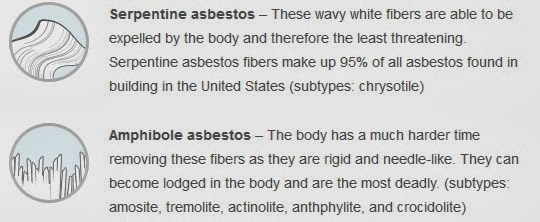
Asbestos exposure is the only proven cause of mesothelioma. Asbestos is a naturally occurring mineral, originally admired for its unique insulating and fire retardant capabilities. Asbestos comes in a variety of types with the most common being serpentine and amphibole. Amphibole is the most dangerous type of asbestos as it is the most likely to cause mesothelioma.

When asbestos exposure occurs, microscopic asbestos fibers can be inhaled or ingested. These fibers damage healthy cells and can cause genetic mutations. These genetic mutations affect cell division and cause mesothelioma tumors. Exposure is most likely when materials containing asbestos are disturbed or loosened, releasing asbestos fibers into the air. Mesothelioma may take between 20-50 years to show symptoms. Symptoms are often mistaken as a common cold or pneumonia with chest pain, breathing discomfort, or a consistent cough.

Occupational exposure is the most common method of exposure. Due to industrial asbestos uses in the past, men are more commonly diagnosed with mesothelioma than women at a ratio of 5 to 1.

What is Asbestos?
Asbestos is a naturally occurring mineral found in rock and other minerals, such as vermiculite. There are two main types of asbestos: serpentine and amphibole. Serpentine asbestos is generally less friable than amphibole asbestos. These categories of asbestos are further broken down into subcategories, but they are all tiny, thin fibers that make up the mineral. The average human hair is approximately 1,200 times thicker than an asbestos fiber.
There are different types of asbestos:


Materials
The cause of mesothelioma is always attributed to asbestos exposure, but determining when the exposure occurred can be difficult. In some cases, patients may not even realize they have been exposed to asbestos at all. Exposure can occur in unlikely places, including the household. Home insulation manufactured before 1975 contains asbestos, as well as many other building materials found in homes. However, when left undisturbed, most materials containing asbestos pose no immediate threat.

Remodeling work on older homes poses the risk of releasing asbestos fibers into the air by disturbing asbestos-containing building materials. Asbestos is not only found in homes, but also in cars. Brake pads, clutches, gaskets and insulation material can contain asbestos, especially in older cars.

The Environmental Protection Agency began requesting lists from American companies of their products containing asbestos in 1981, which eventually led to the Asbestos Information Act of 1988. Although asbestos is still used in the United States, this law requires manufacturers of asbestos products to submit detailed information on their products to the EPA.

Friability
Regulations regarding asbestos also categorize different types of asbestos into friable and non-friable asbestos. Friability is simply how easily a substance crumbles or breaks apart. Non-friable asbestos-containing materials are generally considered as relatively safe (when undisturbed). However friable asbestos-containing materials are much more dangerous. non-friable asbestos-containing materials are regulated in the United States; however, any asbestos-containing material can become friable.

Occupational Exposure
Occupational exposure to asbestosOccupational hazards are the most common cause of asbestos exposure. Prior to 1920, mining raw asbestos mineral was the most common exposure. However, an array of occupations like construction, military, machine work, and auto care began using asbestos materials in the 1940’s.

From this time until the end of the 1970s, approximately 27 million Americans had significant exposure to asbestos. Asbestos was heavily used in the 1960s and 1970s when the material became more common. However, production slowed as regulations began to be enforced in the early 1980s.

Construction and industrial production are the occupations that carry the highest risk of asbestos exposure. This is because asbestos was commonly used in building materials ranging from insulation to wiring and pipefittings. Asbestos-containing building materials (ACBM) were common until the 1980s. Instances of occupational exposure began declining as working conditions and regulations regarding asbestos were established. This caused the subsequent decline of asbestos use in industrial materials.

The Occupational Safety and Health Administration (OSHA) is responsible for protecting workers from health hazards by enforcing regulations on uses of asbestos-containing materials. Standards enforced by OSHA have tremendously decreased occupational exposure to asbestos. However, exposure is still possible if workers aren’t aware of materials containing asbestos. The main occupational protection standard, known as the permissible exposure limit (PEL) for asbestos, was established in 1986. Other federal agencies that set regulations for safe conditions with regard to asbestos exposure include the Environmental Protection Agency (EPA) and the Mine Safety and Health Administration (MSHA).

Military veterans, especially those who served during World War II, face the highest exposure to asbestos materials. Navy veterans have significantly higher rates than any other branch due to the heavy use of asbestos on ships and submarines. Veterans exposed to asbestos during active duty may qualify for benefits from VA

Top 10 High-Risk Occupations :

  •     Railroad Workers
  •     Ship Builders
  •     Factory Workers
  •     Construction Workers
  •     Miners
  •     Electricians
  •     Insulation Installers
  •     Automotive Workers
  •     Power Plant/Refinery Workers
  •     Plumbers
Secondary Exposure
Secondary exposure to asbestosSome mesothelioma victims do not remember where they were exposed. Others may not even realize they were exposed. It is possible these individuals had secondhand exposure to asbestos. Spouses of construction or factory workers are the most common example of secondary exposure. Many workers returned home with asbestos fibers on their clothes, skin, and in their hair. Secondary exposure occurred from contact with the directly-exposed spouse and even from doing laundry.

Secondary asbestos exposure has occurred in occupational environments as well. Any workers who spent time around employees exposed to asbestos could be at risk.

Lastly, secondary asbestos exposure has occurred in communities where asbestos was released into the air from nearby factories manufacturing asbestos materials, shipyards, mills, mines, and building demolitions.

Libby, Montana
Libby, Montana is an example of mining leading to secondary exposure. W.R. Grace and Company took over the vermiculite ore mine in Libby in 1963. Despite knowing the dangers of asbestos, the mine operated without regulations until 1990. The EPA has spent over $450 million on the cleanup, and at least 300 deaths have been attributed to this one location. The Affordable Care Act offers financial assistance for mesothelioma victims and public health emergencies like Libby.


Naturally Occurring Exposure
Natural exposure to asbestosSome people may come into contact with naturally occurring asbestos fibers. This classification of asbestos refers to the naturally occurring minerals found in underground rock, which is mined and used in commercial building materials. Most naturally occurring asbestos is too deep underground to be easily disturbed. However, there are some areas where naturally occurring asbestos is close enough to the surface to pose a threat to people in the immediate vicinity. As such, there is a significant threat of occupational exposure to naturally occurring asbestos for miners.

Although rare, there is potential for water contamination from run-off of land erosion. When it rains, the naturally occurring asbestos has the possibility to contaminate natural water supplies, like rivers or lakes. This happens when dirt is pushed down a mountain or hillside by the rain. One instance of water contamination was in Coalinga, California. The Coalinga Asbestos Mine covers over 120 acres and has contaminated the water supply through mining activities.

Risk Factors
There are several risk factors that account for the development of mesothelioma and can increase the risk of cancer. The basic factors which increase the risk of developing mesothelioma are:
  •     Occupation
  •     Type of Asbestos
  •     Exposure Duration/ Frequency
  •     Previous Lung Disease
  •     Working Conditions
  •     Breathing Rate While Exposed
  •     Weather
  •     Exposure Concentration
One of the most prominent factors involved in asbestos exposure is work history. Today, occupational exposure does not pose the same threat it did before the 1980s due to standards of permissible exposure limits and other regulations. However, this risk is higher if working conditions did not meet these standards. Before the 1980s, working conditions with respect to asbestos exposure varied depending on the specific profession. Miners, for example, were likely to be exposed to higher concentrations of asbestos because of the poorly ventilated working conditions.

Another factor closely related to concentration is the breathing rate of the worker during exposure; more fibers are likely to be inhaled with a higher the breathing rate. Weather during the time of exposure is also a factor because rainy weather lowers the particulate count of fibers in the air. Therefore, dry weather during exposure increases the risk of developing mesothelioma.

Demographics
People who are most at risk for mesothelioma include: men, those over 65 years of age, and military veterans. Over 75% of mesothelioma deaths are men. This makes sense as most asbestos exposure occurred in construction related occupations historically dominated by men. Mesothelioma symptoms usually appear in patients between the ages of 50 and 70 years old. However, they can occur in patients as early as their 20’s if they were exposed at a young age. There are also certain states where instances of mesothelioma are more common.

Summary
Those who believe they have been exposed to asbestos should be aware of the symptoms associated with asbestos related diseases. These may be harder to detect when they occur in people with chronic breathing issues like asthma, so staying conscious and aware of your health is key. Individuals who have been exposed to asbestos should consider seeing a physician who can test for any abnormalities.

Mesothelioma is caused by exposure to asbestos. Being aware of the risk factors associated with mesothelioma is the best way to protect yourself from exposure and decrease your risk of developing this cancer.

source:mesotheliomaguide.com  

Pericardial Mesothelioma

google.com, pub-5877111316406693, DIRECT, f08c47fec0942fa0
Pericardial mesothelioma affects the lining surrounding the heart (pericardium). It is the rarest form of mesothelioma and only accounts for 1% of all diagnoses.

Overview Pericardial Mesothelioma
Pericardial mesothelioma is a cancer which affects the pericardium, which is the lining surrounding the heart. It is currently unknown how the asbestos fibers get into the pericardium. Pericardial mesothelioma is extremely hard to detect. Men are two times more likely to be diagnosed with pericardial mesothelioma than women. There have been cases of pericardial mesothelioma metastasizing to the lung (pleural) or abdomen (peritoneal).

Pericardial Mesothelioma


Symptoms Pericardial Mesothelioma

Patients may experience chest pain or other symptoms of pericardial mesothelioma. One of the most common reasons pericardial mesothelioma goes undetected is because it is highly uncommon for mesothelioma to originate in the pericardium. Patients have also reported symptoms that cause it to be mistaken for other heart ailments.
  •     Chest Pain
  •     Shortness of Breath
  •     Swelling of Face or Arms
  •     Fatigue
  •     Cough
  •     Pericardial Effusion
  •     Irregular Heartbeat
  •     Murmurs
Diagnosis Pericardial Mesothelioma
Physicians have a difficult time diagnosing pericardial mesothelioma for many reasons. The extreme rarity of pericardial mesothelioma is the main reason it is difficult to diagnose. It has also been confused with constrictive pericarditis, cardiac tamponade (pressure from fluid buildup) and cardiac failure. However, pericardial mesothelioma can be diagnosed through fluid and tissue biopsies. Patients with pericardial mesothelioma commonly complain about chest pain. When mesothelioma is suspected, cardiac surgeons extract fluid or tissue and test the sample for mesothelioma.

Doctors utilize tests like the echocardiogram and CT scan to gather images that may help conclude if a patient has pericardial mesothelioma. An echocardiogram uses sound waves to diagnose or monitor heart ailments, including atrial fibrillation, heart disease and pericardial mesothelioma. The echo allows a doctor to see how a patient’s heart is beating and pumping blood. Many patients with pericardial mesothelioma experience chest pain because their heart is unable to pump at maximum capacity. Echocardiograms are also essential to determine the extent to which the heart has been affected by the mesothelioma.

Treatment Pericardial Mesothelioma
Treatment options for pericardial mesothelioma are restrictive because of the proximity of the lining to the heart itself. Unlike pleural or peritoneal mesothelioma, where the lung or abdominal lining can be removed, the pericardium is presents further risks and can be difficult to remove.

Pericardial Mesothelioma
Pericardiectomy Surgery
Mesothelioma Pericardiectomy SurgeryIf patients are deemed candidates, they may be able to receive a pericardiectomy. A pericardiectomy is the removal of some or all of the pericardium. This procedure is done to relieve the heart from being constricted. It is a risky surgery because of the heart being so close and risk of damage in the process. It’s also a very rare procedure in the case of mesothelioma, as many diagnoses have already metastasized. It is also seldom performed because the diagnoses of pericardial mesothelioma are few and far between. Only 1% of all diagnosed mesothelioma originates in the pericardium.

Prognosis Pericardial Mesothelioma
The prognosis for patients with pericardial mesothelioma is poorer than for pleural and peritoneal mesothelioma. The rarity of this type of mesothelioma means it isn’t able to be studied as much as other mesotheliomas, contributing to the poor prognosis. There is also less information available about how the asbestos fibers lodge into the pericardium and which treatments are most effective. However, some cases show a positive outlook in treatment options. As more cases surface, additional treatment options are in the process of being researched and developed.

One patient who underwent a pericardiectomy survived five years after his initial surgery date. There has been research conducted through Johns Hopkins Hospital that shows pericardiectomies are performed with lower mortality rates as time goes on. Taking part in clinical trials offers unique treatments and is one way many patients improve their prognosis.

source:mesotheliomaguide.com 

Peritoneal Mesothelioma

google.com, pub-5877111316406693, DIRECT, f08c47fec0942fa0
Peritoneal mesothelioma is a form of cancer affecting the lining of the stomach (the peritoneum). It is caused by the ingestion of asbestos fibers.

Overview Peritoneal Mesothelioma
Peritoneal mesothelioma accounts for 20% – 25% of all mesothelioma cases. It is the most common diagnosis after pleural mesothelioma. Peritoneal mesothelioma develops after asbestos fibers are ingested. The body attempts to filter and remove these fibers, but sometimes the fibers attach to the peritoneum. Scar tissue builds up as a response to the body’s fight against the irritation of the fibers and can result in genetic cell damage. This can cause unchecked cell division and the formation of a malignant tumor.

Peritoneal Mesothelioma

Similar to pleural mesothelioma, peritoneal mesothelioma is most common in men who are between the ages of 50-69 years old. Peritoneal mesothelioma does not usually spread to the lymphatic system (lymph nodes) or blood stream. It usually metastasizes in large masses in the same areas where it originated. Learn more about peritoneal mesothelioma treatment options in our free Mesothelioma Guide.


Symptoms Peritoneal MesotheliomaA patient with peritoneal mesothelioma may not experience symptoms at all. If symptoms are demonstrated, they may be mistaken for other illnesses. The earlier the mesothelioma is detected, the sooner it can be treated. One common symptom in many peritoneal mesothelioma patients is the existence of fluid pockets called ascites, which often cause the stomach region to bulge outward.
  1.     Abdominal Pain
  2.     Loss of Appetite
  3.     Blood Clots
  4.     Fatigue
  5.     Fluid Buildup (Ascites)
  6.     Nausea
  7.     Abdominal Swelling
  8.     Fever or Sweating
  9.     Tissue Lumps in the Abdomen
  10.     Anemia
  11.     Seizures
  12.     Bowel Problems
In most cases, peritoneal mesothelioma does not spread to the lungs. It has been shown to spread to the other abdominal areas, such as ovaries, liver, or intestines.This metastasis often causes it to become discovered and sometimes, misdiagnosed. Symptoms of stomach pains or ascites sometimes may result in a misdiagnosis of hernias or a simple stomach ache.


Diagnosis Peritoneal Mesothelioma
CT scans or MRI test results may not show the presence of peritoneal mesothelioma. Peritoneal tumors that show up on these scans are often confused with abdominal distension (gas). X-rays are the most commonly used imaging tool to diagnose peritoneal mesothelioma because tumors are easier to distinguish from distension. Doctors may also use a technique called peritoneoscopy. In a peritoneoscopy a surgeon makes a small incision in the patient’s abdomen and uses a small camera to explore the abdomen. There is also a tool on the camera that helps to extract tissue on the peritoneum to test for mesothelioma.

Doctors do not use a standard staging system when diagnosing peritoneal mesothelioma. Because the abdomen consists of several organs, peritoneal mesothelioma develops differently in every patient. For this reason, there are several staging systems for this type of mesothelioma, but none have been widely accepted as accurate. Generally, in stage one, the mesothelioma is centralized in the abdomen and is more than likely able to be entirely removed. As it progresses to stage 2, the cancer may spread more but is still contained in the peritoneum. In the third stage, the cancer begins to metastasize to other organs, such as the liver and colon. In the final stage, stage 4, the mesothelioma has spread to other organs outside the abdomen. These stages are extremely variable, making diagnosis difficult and necessitating the need for a mesothelioma specialist.


Treatment Peritoneal Mesothelioma
Treatment options are dependent on the stage a peritoneal mesothelioma patient is diagnosed with. There are more curative treatment options, like cytoreduction surgery, for patients with earlier stages. Patients in the later stages may receive palliative treatments, like radiation or chemotherapy. Another palliative treatment option may be a paracentesis to drain the fluid buildup in the abdomen.

The most successful treatment conducted has been the combination of cytoreduction surgery and HIPEC (hyperthermic intraperitoneal chemotherapy). The cytoreduction removes most of the cancerous tumor and HIPEC has been shown to kill the remaining cells. This treatment has been relatively successful in patients with good general health. Find a peritoneal mesothelioma specialist using our free Doctor Match Program.


Surgery Peritoneal Mesothelioma

 Surgery Peritoneal MesotheliomaCytoreduction Surgery
Peritoneal Mesothelioma Cytoreduction Surgery TreatmentCytoreduction is also referred to as “debulking.” The goal of cytoreduction is to remove as much of the tumor as possible, if not all of it. It is often not possible to remove the entire tumor. The peritoneum (lining of the abdomen) is completely removed and is usually performed in patients with stage 1 or 2 peritoneal mesothelioma. It is also done for other abdominal cancers, so it is performed widely. Cytoreduction recovery can take anywhere from 7 to 13 days. One study showed a majority of patients experiencing nausea up to 13 days after their surgery. Regular activities, such as eating, drinking, re-gaining bowel functions, and mobilization were re-established within 11 days after the cytoreduction and HIPEC.


Hyperthermic Intraperitoneal Chemotherapy (HIPEC)
Hyperthermic Intraperitneal Chemotherapy is also known as HIPEC treatment. HIPEC is used in patients who have cancers of the abdomen. This high dose of chemotherapy removes any remaining cancer cells left after a cytoreduction surgery. HIPEC is a heated and sterilized chemotherapy treatment. The side effects of this chemotherapy are less than those of regularly administered chemotherapy. At the end of the 60-90 minutes, the chemotherapy is washed out of the body.
  • Also referred to as “hot chemo”.
  • Usually done after cytoreduction.
  • Administered both during surgery (most effective) and after using an abdominal catheter.

Secondary Treatment Peritoneal Mesothelioma

Chemotherapy

Peritoneal mesothelioma patients in the later stages may receive chemotherapy for palliative purposes. The patients may be given the same combination as with pleural mesothelioma, pemetrexed and cisplatin. Studies are also being done on the effectiveness of the drugs vinorelbine and gemcitabine in combination with cisplatin.

A recent case in 2009 shows promise with the combination of two popular chemotherapy drugs in patients with peritoneal mesothelioma. A patient went in for an unrelated procedure and which signs of peritoneal mesothelioma were found. The patient was given the combination of permetrexed (500 mg) and cisplatin (80 mg). After the first six cycles all signs and markers of the peritoneal mesothelioma were gone. Six months later, CT scans showed no changes or reoccurrence regarding the mesothelioma. Four years later, the patient is alive with no signs of disease progression.

Studies show the normal survival rate of patients with peritoneal mesothelioma is around 7.6 months if they do not receive chemotherapy. Forty-one percent of patients who were given the combination experienced improvement, while 17% showed satisfactory results with cisplatin alone. On average, patients lived 12.1 months longer when having received the combination, compared to 9.3 months on just cisplatin.
Radiation

For many peritoneal mesothelioma patients, radiation is not usually effective. It may shrink tumors before or after a cytoreduction. However, there have been no cases reported of complete eradication by solely using radiation. A mesothelioma specialist can determine if radiation is right for the patient based on their specific diagnosis.


Prognosis Peritoneal Mesothelioma
Although there isn’t currently a cure for mesothelioma, the outlook of new research is hopeful. There have been cases of long-term survivors who have been in remission for over fifteen years. The most successful cases are those whose mesothelioma is detected in the earlier stages and treatment immediately begins. Most cases include a cytoreductive surgery and HIPEC. This method of treatment is responsible for the recovery of survivors Alexis Kidd and Jill Litton.

Although there are similarities between pleural and peritoneal mesothelioma, the treatment options differ. The median survival time for patients who have not had the cytoreductive surgery is about a year; however, in patients who have had the surgery, survival grows up to five years. One study even reported a median survival time of over seven years among participants. Read the incredible stories of people who survived mesothelioma.

source:mesotheliomaguide.com 

Pleural Mesothelioma

google.com, pub-5877111316406693, DIRECT, f08c47fec0942fa0
Pleural Mesothelioma is a form of cancer in the pleura (protective lining of the lung). It is caused by exposure to asbestos fibers.

Overview Pleural Mesothelioma
Pleural mesothelioma is the most common form of mesothelioma and makes up 75% of all mesothelioma diagnoses. It develops when asbestos fibers are inhaled and attach to the lining of the lungs, known as the pleura. This can include both the visceral (inner) or the parietal (outer) pleura. The particles irritate the pleura, resulting in inflammation. The pleural tissue develops into scar tissue, which can cause genetic damage and tumors.
 It takes anywhere from ten to fifty years after asbestos exposure for mesothelioma to develop in the pleura.

Pleural Mesothelioma
Mesothelioma in the pleura spreads quickly because of its proximity to vital organs. Generally, it develops in the lining of the lungs and then spreads to the rest of the lung, the chest wall, or the nearby diaphragm. The central location of the lungs in the body means the other vital organs are nearby.

Mesothelioma in the pleural space can metastasize to the lymph nodes, which can cause cancer to spread throughout the body more quickly. It is common for it to metastasize to the central organs. There have also been cases which linked pleural mesothelioma to spread to the brain, although this is uncommon.

Fighting pleural mesothelioma takes a mix of information an action. Our free Mesothelioma Guide puts the power in your hands to find a top pleural mesothelioma specialist as well as which treatment options work best.

Symptoms Pleural Mesothelioma
Prior to a pleural mesothelioma diagnosis, patients may experience symptoms associated with common illnesses, such as the onset of a fever, shortness of breath or coughing. Although these symptoms are common, if a patient has been exposed to asbestos in the past, it is important they consult a physician.
  1.     Lower Back Pain
  2.     Shortness of Breath (dyspnea)
  3.     Unexplained Weight Loss
  4.     Swelling of Face or Arms
  5.     Fluid Buildup (Pleural Effusion)
  6.     Chest Pain (Pleurisy)
  7.     Dry or Painful Cough
  8.     Fever or Sweating
  9.     Tissue Lumps in the Chest
  10.     Coughing up Blood (Hemoptysis)

Causes Pleural Mesothelioma
The main cause of mesothelioma is exposure to asbestos fibers. Asbestos products are usually found in homes and businesses built prior to the 1980’s. Occupational exposure is the most common form, although exposure in the home can occur as well. Genetic factors may also play a role in the development of mesothelioma. However, this connection has not been fully investigated. The genetic links may actually be sourced to common exposure to asbestos-related environments.

Veterans with Mesothelioma

The largest group diagnosed with mesothelioma are military veterans, specifically Navy service members. Asbestos was commonly used because of its flame-resistant qualities. Millions of veterans were exposed between the years 1930 and 1980. Veterans diagnosed with mesothelioma can work with our team (including a retired Lieutenant Commander) to get help filing a VA Claim. There are options available for those who served our country.

Diagnosis Pleural Mesothelioma
If test results determine the possible presence of cancerous tumors or growths, doctors perform a biopsy on the area. A biopsy is a small fluid or tissue sample that determines if cancer cells are present. Tissue biopsies are the most reliable, with a 96% conclusivity. Depending on the results of the biopsy and if the cancer has spread, a patient is diagnosed with a specific stage of pleural mesothelioma. The stages range from 1 to 4.

The 4 Stages:
  • Stage 1
  • The cancer is only located in the pleural lining of the lungs.
  • Stage 2
  • The cancer has spread to more of the lung, part of the diaphragm, and localized lymph nodes.
  • Stage 3
  • The cancer has metastasized to nearby organs and mroe lymph nodes
  • Stage 4
  • The cancer has spread to the other organs and all lymph nodes are fully involved.

Treatment Debate of Pleural Mesothelioma
Treatment Options for pleural mesothelioma are dependent upon which stage a patient is diagnosed with. Patients with earlier stages of pleural mesothelioma are usually candidates for curative surgeries like an extrapleural pneumonectomy or a pleurectomy. Patients who are in the later stages of mesothelioma may receive more palliative treatment options, such as a pleurodesis, to help alleviate the discomfort caused by the tumors.

There is a current debate between the effectiveness of an extrapleural pneumonectomy (EPP) versus a pleurectomy. The EPP surgery was initially developed for mesothelioma by Dr. David Sugarbaker at Brigham and Women’s Hospital in Boston, MA. An EPP removes the entire lung, part of the pericardium, and part of the diaphragm – all the areas the mesothelioma has metastasized to during advanced stage 2 mesothelioma. There have been many successful EPP surgeries. Patients’ survival rate dramatically increases and there have been cases of patients living over fifteen years after having the EPP surgery.

Dr. Robert Cameron is the original developer of the pleurectomy surgery and is the most outspoken critic of the extrapleural pneumonectomy. He has stated that the pleurectomy is the better surgery for patients because it is a lung sparing surgery with lower mortality rates. A pleurectomy may sometimes include removal of part of the lung, but not the entire lung. Rarely does a pleurectomy remove all the affected areas of stage 2 pleural mesothelioma due to the intricate spread. According to him, the quality of life of a pleurectomy patient is better than one who had an extrapleural pneumontectomy. Although the pleurectomy has a lower mortality rate, treatment plans may involve different surgical procedures depending on the patient’s unique diagnosis.

Since finding a doctor is one of the most critical steps a patient can take, we developed a resource to assist with it. Our free Doctor Match program connects patients with pleural mesothelioma specialists across the nation. We’ve built relationships across the country with the very best mesothelioma specialists and place patients with a doctor who is best able to treat them.

Surgery Extrapleural Pneumonectomy (EPP)
Extrapleural Pneumonectomy Mesothelioma Surgery TreatmentExtrapleural pneumonectomy is the most common surgical treatment for stage 1 or 2 malignant pleural mesothelioma. During EPP, a surgeon removes the diseased lung as well as the pleural space covering the lung, heart, and diaphragm.

Extrapleural Pneumonectomy (EPP)

The goal of EPP is to remove as much, if not all, of the cancerous tissue possible. Chemotherapy may be used as a pre-surgery (neoadjuvant) precaution to shrink the tumors and may also be recommended post-surgery (adjuvant). Dr. David Sugarbaker, of Brigham & Women’s Hospital, is the creator of the EPP and is one of the leading mesothelioma physicians in the country.

Pleurectomy/Decortication (P/D)
Pleurectomy with Decortication Mesothelioma Surgery TreatmentPleurectomy with decortication may be used in stage 1 mesothelioma to remove the cancerous pleura. It also may be used in stages 3 or 4 to alleviate pain while breathing because the lung cannot expand entirely.

Pleurectomy with decortication helps patients ease in breathing and controls the fluid build-up that generally happens in the pleural space. Tumors on the surface of the lung are also removed. Palliative surgeries are done to relieve any pain the patient may be experiencing and improve their quality of life.

Secondary Treatments Pleural Mesothelioma

Chemotherapy
Currently, the most effective form of chemotherapy given to pleural mesothelioma patients is the combination of pemetrexed (Alimta) and cisplatin (Platinol). This combination is the standard for chemotherapy treatment and is given to all pleural mesothelioma patients. Pemetrexed is the only medication of its kind approved by the FDA to specifically treat mesothelioma. Doctors may also use drugs not yet been approved to treat mesothelioma patients.

Another form of chemotherapy given to pleural mesothelioma patients is known as intrapleural chemotherapy. This process involves a catheter which applies the chemotherapy directly to the tumor site. This technique is only used in stage 1 patients because the cancer has only spread to the pleura.

Radiation
For mesothelioma patients, radiation techniques are rarely curative when used on their own. Radiation may be used before or after surgery, such as an extrapleural pnuemonectomy. Radiation used after surgery has shown to greatly reduce the possibility of cancer recurrence.

Radiation is not usually used in the later stages of pleural mesothelioma because it has spread to other parts of the body. The only instance in which radiation would be used would be for palliative purposes. There may be chest discomfort due to fluid build up or tumor pressure, in these circumstances, radiation may be used. The radiation may help with tumor pressure because it shrinks the tumor to alleviate the pain.

Patients looking for a complete pleural mesothelioma treatment plan (including chemotherapy and radiation treatments) should visit Cancer Center Guide

Prognosis
There are many factors that play a role in a patient’s prognosis. The cell type, stage, age, and overall health of the patients are all important. In pleural mesothelioma cases women have a better survival rate than men.

One study done by Dr. David Sugarbaker showed there was a five year (or more) survival rate in patients diagnosed with pleural mesothelioma. These patients had epithelioid cell types and no lymph node involvement (stage 1). The patients underwent an extrapleural pneumonectomy which removed most of the cancer cells. The outlook of treating pleural mesothelioma is getting brighter as more research is being done.

Rarely does a pleurectomy remove all the affected areas of stage 2 pleural mesothelioma due to the intricate spread. Early treatment is key in the prognosis of mesothelioma. The earlier the cancer is detected, the sooner treatment can begin. Patients who are fighting pleural mesothelioma can learn a lot from mesothelioma survivors. Their stories of hope prove that its possible to live beyond a prognosis.

source:mesotheliomaguide.com

Mesothelioma

google.com, pub-5877111316406693, DIRECT, f08c47fec0942fa0
Do you know what Mesothelioma is? Almost everyone who develops mesothelioma has been in contact with asbestos.  esothelioma is a type of cancer that grows in the lining of the lungs or abdomen, and it can take many decades for the cancer to appear. The main symptoms are chest pains or breathlessness.


Working with asbestos is the major risk factor for mesothelioma. In the United States, asbestos is the major cause of malignant mesothelioma and has been considered "indisputably" associated with the development of mesothelioma. Indeed, the relationship between asbestos and mesothelioma is so strong that many consider mesothelioma a “signal” or “sentinel” tumor. A history of asbestos exposure exists in most cases. However, mesothelioma has been reported in some individuals without any known exposure to asbestos. In rare cases, mesothelioma has also been associated with irradiation, intrapleural thorium dioxide (Thorotrast), and inhalation of other fibrous silicates, such as erionite. Some studies suggest that simian virus 40 (SV40) may act as a cofactor in the development of mesothelioma. This has been confirmed in animal studies, but studies in humans are inconclusive.

Asbestos was known in antiquity, but it was not mined and widely used commercially until the late 19th century. Its use greatly increased during World War II. Since the early 1940s, millions of American workers have been exposed to asbestos dust. Initially, the risks associated with asbestos exposure were not publicly known. However, an increased risk of developing mesothelioma was later found among shipyard workers, people who work in asbestos mines and mills, producers of asbestos products, workers in the heating and construction industries, and other tradespeople. Today, the official position of the U.S. Occupational Safety and Health Administration (OSHA) and the U.S. EPA is that protections and "permissible exposure limits" required by U.S. regulations, while adequate to prevent most asbestos-related non-malignant disease, they are not adequate to prevent or protect against asbestos-related cancers such as mesothelioma. Likewise, the British Government's Health and Safety Executive (HSE) states formally that any threshold for mesothelioma must be at a very low level and it is widely agreed that if any such threshold does exist at all, then it cannot currently be quantified. For practical purposes, therefore, HSE assumes that no such "safe" threshold exists. Others have noted as well that there is no evidence of a threshold level below which there is no risk of mesothelioma. There appears to be a linear, dose-response relationship, with increasing dose producing increasing disease. Nevertheless, mesothelioma may be related to brief, low level or indirect exposures to asbestos. The dose necessary for effect appears to be lower for asbestos-induced mesothelioma than for pulmonary asbestosis or lung cancer. Again, there is no known safe level of exposure to asbestos as it relates to increased risk of mesothelioma.

The duration of exposure to asbestos causing mesothelioma can be short. For example, cases of mesothelioma have been documented with only 1–3 months of exposure. People who work with asbestos wear personal protective equipment to lower their risk of exposure.

Latency, the time from first exposure to manifestation of disease, is prolonged in the case of mesothelioma. It is virtually never less than fifteen years and peaks at 30–40 years. In a review of occupationally related mesothelioma cases, the median latency was 32 years. Based upon the data from Peto et al., the risk of mesothelioma appears to increase to the third or fourth power from first exposure.

People who have worked with asbestos or material containing asbestos - for example, insulation engineers, shipyard workers, maintenance workers and building workers - can be affected by mesothelioma. But workers in many other industries may have also been exposed to asbestos, but not remember being exposed to it, so they may be asked for a thorough work history. People who have come into contact with asbestos from washing contaminated clothing,or living near asbestos factories may also develop mesothelioma.

There is no cure for mesothelioma at the moment, although there are treatments available that can help to control the symptoms and improve quality of life. The kind of treatment offered will depend on individual circumstances and how advanced the cancer is.

Every person diagnosed with mesothelioma will need support and help. Many may find it hard to accept their diagnosis, while others will feel angry and bitter, as may their relatives and friends. It is important that anyone diagnosed with mesothelioma has access both to information about their illness and treatment and to emotional support, including someone to talk to when they feel ready.

Wrinkles Reduced Thanks to Change Diet

google.com, pub-5877111316406693, DIRECT, f08c47fec0942fa0
http://urdoctor-info.blogspot.com/
Wrinkles Reduced Thanks to Change Diet and every woman must really want a face smooth and free of wrinkles. One type of diet, that diet face, can be done to produce wrinkle-free face as you would expect.


Face diet is more emphasis on the importance of maintaining food intake for the skin to remove wrinkles and premature aging. This diet has been performed by actress Eva Mendes. With a face this diet for three days, you will get a skin toned, glowing and wrinkle free.

American dermatologist, Dr. Nicholas Perricone, said that the face of this diet can be done by controlling the pattern and appetite, as well as avoid some foods and beverages. Perricone believes that the consumption of alcohol, sugar, salt, and coffee will make the inflammation in the skin, and trigger premature aging. He also advocated for reducing intake and replace it with a variety of foods that can promote skin health such as omega 3 oils and antioxidants, which protects the membranes of skin cells around the face and helps retain moisture.

He also recommended to consume plenty of water for other than good for your health and digestion, water also proven to moisturize and nourish the skin. In three days you are advised to consume lots of salmon meat, green vegetables, fruits, and nuts. All these foods have antioxidants and fatty acids are highly nutritious. In addition, also reduce intake of salt, sugar, caffeine, wheat, and wine from your menu list.

The recommended diet, among others, three scrambled eggs or omelets, salmon, and small bowl of porridge, and fruit for breakfast. Salmon salad and fruit for lunch, salmon, green leafy vegetables, and fruit for dinner. Reduce caffeine consumption as well, because too much caffeine content in the blood can dilate blood vessels and makes the skin look red.

With this diet could face looks brighter, and healthier. However, according to dermatologist Dr Sam Bunting from Harley Street, "It took six weeks to see the difference in the skin so it is actually much less three days to see the improvement. Even so avoid excessive salt intake will help reduce excess water retention."

Strict Diet Better Two Days in a Week

google.com, pub-5877111316406693, DIRECT, f08c47fec0942fa0
http://urdoctor-info.blogspot.com/
Strict Diet Better Two Days in a Week and to lose weight not infrequently the women the diet by limiting the amount of calories into the body.

Often the diet with calorie counting is done for seven days a week until their bodies feel really skinny. Yet according to recent research conducted in South Manchester University Hospital, who conducted a strict diet for two days a week is more effective for weight loss compared with counting calories that enter the body during the week.


The researchers found that women who ate fruits, vegetables, and lean meat for two days during the week, and the remaining five days are free to eat a variety of food preferences, was able to lose weight almost twice as much than women who keep a strict diet all the time.

To perform this experiment, the researchers placed 115 women volunteers to run one of three diets tested. In the first diet, these women are required to run a diet with only eating 650 calories a day for two days a week. This diet made circuitry to reduce the consumption of calories from carbohydrates such as pasta, bread, and potatoes, and all fatty foods. After the diet for two days, five days rest were freed to eat healthy foods that they like.

Women on both diets are also required to reduce the carbs for two days a week, but they were not given food limitation in a certain amount of calories. In five days of rest, they are also allowed to eat healthy foods that they like.

Finally, the third type of diet, these women followed a standard weight-loss diet (continuous) with only consume about 1,500 calories each day and avoid fatty foods and alcohol.

After three months of running this diet program, women who run the program first and second diets respectively able to lose weight by 4 kg. This figure was almost two times more than a third of women with this type of diet is the diet constantly. They are only able to lose weight around 2.4 kg.

Dr Michelle Harvie of the Genesis Breast Cancer Prevention Centre at the site revealed that during the last five days on the diet because they do not still carry over effects of a strict diet that has been running for two days before. This resulted in the continued benefits and change in mindset of the brain for two days on a strict diet eating patterns that are considered "normal" for five days later. This mindset changes result in a loss of load and pressure to diet, so make your diet can be done with a relaxed, and happier.

7 Causes Your Concentration Difficult

google.com, pub-5877111316406693, DIRECT, f08c47fec0942fa0
urdoctor-info.blogspot.com
7 Causes Your Concentration Difficult and each person must have experienced situations where it is difficult to concentrate. This condition can happen to anyone regardless of age status.


To find out what are the triggers, the following are 7 (seven) the reason why your mind is easy to float along with the suggestion that the experts:

1. Low hormone levels
The mind is easily dispersed signals that you may be deficient in vitamins or hormones, particularly if accompanied by unusual fatigue. "If there is a deficiency in thyroid hormones, so it slows down your metabolism, thereby reducing blood flow and function of cells in different parts of the brain," said Dr Orford, Expert Staff of the Mayo Clinic, Preventive Medicine Division, in Scottsdale.

Do this: Make an appointment with your doctor to simply consult. After that, make a list every time there is a change of health problems to help detect the source of problems related to concentration problems.

"You also can perform more comprehensive medical examination, including blood tests," said Dr Orford. In addition, you can also ask your doctor to examine cardiovascular risk factors, such as hypertension, cholesterol, metabolic syndrome or prediabetes. Because, if not promptly treated, may cause cognitive decline.

2. Hormones have been damaged
It's hard to concentrate is the most common complaints of women who experience perimenopause, said Kimberly Pearson, MD, a psychiatrist at Massachusetts General Hospital Center, Women's Mental Health.

Do this: If the other signs pointing to the perimenopause (hot flashes, night sweats, vaginal dryness), to consider short-term hormone replacement therapy.

"Most women who've done it feels like to get back his memory," he said.

3. Influence of drugs
Some medications such as anti-depressants can affect your mood and concentration when you decide to stop taking them. Antihistamines, for example, sedatives can trigger drowsiness long enough.

Try this: Write down all the medications you're taking and ask your doctor, whether any of the medicines that can cause concentration problems.

4. Cigarette
Besides damaging the general health, the effects of smoking can also affect your concentration power. The more and longer you smoke, gray matter in the brain more quickly lost. In fact, when trying to quit smoking, you will have trouble concentrating, said Christopher Kahler, Ph.D., of Brown University.

"This is a common complaint smokers. But, you will be getting more benefit psychologically if you stop smoking," he said.

Do this: The more happy you feel when trying to quit, the more likely you are to succeed, says Kahler. The point is how you can do to improve mood.

5. Unhealthy eating
What you eat have a major impact on mental clarity, said Laura Middleton, PhD, assistant professor of kinesiology at the University of Waterloo in Ontario. Poor eating habits increase the risk of disease, such as obesity, hypertension, high cholesterol, and other diseases that can impair cognitive function and lead to obesity, making it more difficult to stay active, which is important for brain health.

Do this: "If it's good for the heart and cardiovascular system, then it is also good for the brain," said Middleton, who advised to adhere to the principles of the Mediterranean diet (a diet high in fish, vegetables, and low in saturated fats and processed foods).

6. Busy
The work is sedentary all day behind a desk or behind the wheel of a car should not be considered good. The work tends to persist and do not involve physical activity can affect your mind. In order to keep the mind sharp, you have to keep moving. Exercise can increase the production of substances that slow the formation of plaques triggers Alzheimer's disease.

"Need a few weeks to be able to feel the benefits. But, after that you will experience positive changes quickly," said Middleton.

Do this: Perform cardiovascular activity for 30 minutes with a period of 3-5 times a week. "If you can do it for an hour, that's good," said Middleton, who also urged to include weight training. Middleton and colleagues found evidence that by being active throughout the day can help keep your mind sharp.

7. Anxiety disorder
Excessive anxiety can cause you trouble concentrating. Because, with a restless mood, a person usually becomes hyper-vigilant with the surrounding environment.

Do this: If you can not concentrate because it was too worried, stop doing the job and do something fun to remove the tension in your head, says Susan Nolen-Hoeksema, PhD, professor of psychology department at Yale. Try to go for a walk, trying new recipes, or play with friends.

3 Drinks a Glut

google.com, pub-5877111316406693, DIRECT, f08c47fec0942fa0
urdoctor-info.blogspot.com
3 Drinks a Glut and Do you want to reduce calories in order to lose weight? You could try taking three types of liquid: low-fat milk, water, and olive oil. According to studies, three fluids are able to make you more satisfied, thereby reducing calorie intake and prevent weight gain.


Find out how it works.

1. Low-fat milk.
People who drink about 600 ml low-fat milk at breakfast, lunch usually will consume much less, than those who drank fruit juice at breakfast. According to the researchers, the protein in low fat milk, water contained in the whey and casein milk-enough to make the filling.

2. Of water.
There have been many studies which suggest that people who drink enough water will feel fuller and will consume far fewer calories throughout the day, compared with people who do not drink enough water. People who are diligent in drinking water also tend to not want to drink sweetened beverages such as sodas, coffee drinks that contain high calories, and sports drinks. If you drink about 475 ml of water before each meal, you also will be easier and faster to lose weight.

3. Olive oil.
Versatile fluid is usually used to make salad becomes more palatable. Moreover, olive oil enriched with olive acid, a compound that can meet your satiety. Acids which include monounsaturated fats has led to small intestine made ​​of fat-like substance that transmits satiety signals from the stomach to the brain. Other foods that contain high olive acid include sunflower seed, canola oil, almonds, and avocados.

Hunger Indicates Not Always Want to Eat

google.com, pub-5877111316406693, DIRECT, f08c47fec0942fa0
urdoctor-info.blogspot.com

Hunger Indicates Not Always Want to Eat and when the stomach as if singing, we tend to respond as hunger that must be filled with food to muffle the sound. In fact, hunger does not always mean we need food.


According to experts at the American Academy of Family Physicians, hunger signals are often the result of physical and emotional needs are felt.

In general there are several conditions that could lead to hunger signals:

1. Dehydration
The characteristics of dehydrated body is limp and sleepy. This is almost the same characteristics when we are feeling very hungry. And the body will react the same, that is asking us to include food as a source of new energy. Therefore, for those who are dieting, the body's fluid needs should be inadequate.

2. Craving or want to eat something
Feeling of wanting to eat certain foods, like chocolate, ice cream, or salty foods, can cause persistent stomach growling. Craving can be caused by many things, ranging from micro-body lacks substance because of the encouragement given to emotion.

3. Under stress
When emotions are not stable, ranging from feeling angry, lonely, or sad, the stomach tends to feel empty because basically there is a need to find certain foods that can provide a calming effect.

4. Need nutrition
When the body lacks energy then it sends hunger signals to the brain. When it was time to eat, you should immediately fill your belly with nutritious food. If we delay too long, might become the head of dizziness, difficulty concentrating, and began to feel exhausted because sugars in the blood thinning. The more hungry then you make the more food eaten.

This is the 23 Habits Triggers Pain

google.com, pub-5877111316406693, DIRECT, f08c47fec0942fa0
urdoctor-info.blogpsot.comThis is the 23 Habits Triggers Pain and Little things can trigger pain and body aches. The use of flip-flops, the stinging smell, or lifting goods by wrong position can lead to pain.


Onset of pain or illness, such as headache, not merely because there are diseases that lodged in the body. Exposure of the environment can lead to pain. Wrong posture while doing the activity also contributed to the incidence of pain and pain in certain body parts.

The WebMD site, exposed many things that can trigger pain. Fortunately, pain or illness can be reduced or prevented with simple steps below:

1. Thongs

Flip-flops are one of many people's favorite footwear. In fact, according to David, MD, of The Cleveland Clinic Florida, flip-flops are not able to support the foot properly. No one complained when the wearer is often the onset of pain in the feet, heels, and knees.

Solution: use footwear that has a proponent of the foot, especially the good foot arch. Avoid the use of flip-flops when going to walk away. Replace with a sneaker.

2. Smart Phone

Cellular phones are now widely circulated not only be used to call or send a short message. Its function is more than that. You can send e-mails, surf the website, and even play games. In essence, many things can be done with this smart phone.

Unfortunately, there are many reported adverse effects, namely the emergence of joint pain in the thumb on younger people. Chances are, yes it was. Forced thumb typing on a smart phone that only a very small ketiknya board.

Solution: When the thumb was "screaming" in pain, immediately rest. If the pain continues, contact your doctor immediately.

3. Wallet

This is actually a warning to men. Most men store the wallet in the back pants pocket. If your partner do the same, ask him to change these bad habits.

Storing the wallet in the back pocket risk of back pain and buttocks, which may radiate to the legs. Cause, wallet and put pressure on the sciatic nerve irritation. Not to mention if the shape of thick. Pressure on the muscles become larger.

Solution: before sitting down, remove the wallet from his pants pocket. Better yet, keep your wallet in the bag only.

4. Drive

Such as work benches, get used to adjust the car seat before traveling. Location of car seats are too far to the rear will make the body try to come forward while holding the steering wheel, so that the position of the head is farther away from, back support. Consequently, there is pain the neck.

Solution: set the car seat with the right position, so that the head and lower back can be propped up with the good. Make sure the wheel is within easy reach, so that your arms slightly bent and relaxed.

5. Video Games

Currently outstanding are many video games that make players take active moves. Unfortunately, if you do not really do it, risk of injury, eg sprain or tearing of ligaments.

Solution: before playing, warm up and stretch. Make sure the room is quite large, thus preventing us from tripping or hitting other objects. Make sure not to play video games longer than the usual sports daily.

6. Bringing Laptops

Laptops have become the most items to be carried on almost every occasion. The problem, bring a laptop to go can cause injury to any form of back pain and shoulder when a laptop bag slung on his shoulder and arm injuries when you're used to carrying a laptop bag.

Solution: consider replacing with a lighter laptop model.

7. Tying Hair

Tide your hair or use a headband that can trigger fast enough or worsening headache. While the use of tight hat can make migraine sufferers are more sensitive to pain.

Solution: if not too crucial, avoid the use of hats that are too tight. So is the hair tie. Shorter hair cut could be a solution for you to talk must often bind to the hair.

8. The smell stung

The smell is not the only stinging odor. Pleasant scent such as perfume or fresh flowers can also trigger headaches or migrants.

Solution: Recognize the scent that can make headaches and try to avoid it.

9. Cheese

Nutritious foods, including cheese and contributor of calcium for the body. It's just like old cheese, blue cheese, cheddar, parmesan, and swiss can trigger headaches.

Solution: create a record list of foods that diasup to help see the relationship between food and headaches. That way, you know what foods are best avoided.

10. syndrome relaxed

Relax was also able to contribute to the emergence of pain. Remember again the habit of relaxing on the couch. Lying on your side while watching television, a place of frequent visits. In fact, such an attitude at risk of neck pain.

Solution: make sure your posture is well maintained even when we were relaxing on the couch though. No less important, try to television is not placed too high, so we have to look for while watching.

11. Sleeping Posture

When you feel pain when a new, getting out of bed in the morning, observe the back sleeping position. Certain sleep positions can cause pain. Sleep prone Ieher risky twist, while making one-handed tilt bed crushed by the head.

Solution: try a little arm below the shoulder (not crushed) while sleeping in a sloping position. Instead, place a pillow between your knees to support the lower back. For those who like to sleep on their backs, put a pillow under the neck and below the knee.

12. Beverages

Alcoholic drinks can trigger the onset of pain. Red wine, whiskey, beer, and champagne is the drink that is often blamed as the cause of headaches.

Solution: avoid alcoholic beverages. If you can not, limit the intake.

13. Skipping meals

Skipping meals causes blood sugar down. Not only cause stomach growls, the number of people, missed meals can trigger headaches.

Solution: do not skip meals. Fill your food intake, for a main meal and snack, a nutritious all day.

14. Lifting the baby

Parents who have babies should definitely go back and forth lifting baby from the crib. Within a day, not counted until the number of times. Be careful, if your position when lifting the baby is not correct, pain and swelling of the arm and the thumb may occur.

Solution: practice pick up the baby without wrist strain. The trick: place the hands on the baby's back and buttocks, then lift with a bigger arm muscles.

15. Lifting the wrong position

Most people, involuntarily, often lifting objects the wrong way. The body is curved forward while taking the goods from the bottom and then pull back when lifting. This method is very wrong and potentially cause back pain.

Solution: remove the goods with the right position. How: bend your knees and hips until your body like a squatting position. Make sure your back straight. After that, grab and lift objects with your leg muscles while tightening the knee and hip.

16. Work table

Often spend time at your desk? Try to place the order again. Poor seat position can cause you to bend forward, so that the neck and back became tense. The monitor is too low or too high will also make the neck tighten.

Solution: place the monitor with the top of the screen at eye level. Create the position of the seat so that we can sit with legs straight and stepped on the floor. Use the pads to the back buffer when needed.

17. Eye strain

Headache, which was centered in the back of the eyebrow can be caused by eye strain. Eye strain occurs when we have uncorrected vision problems.

Solution: schedule an eye exam to find out whether you need corrective lenses or not. If you already use glasses, it might be time to replace with a new size.

18. Chattering teeth

Wake up you feel pain in your jaw plus headache, you may have chattering teeth during sleep. In addition to pain,
hearing could be damaged if you are classified as chronic teeth chattering.

Solution: contact your dentist immediately. Usually they will suggest the use of a mouth protector will protect your teeth.

19. Sex

Sex is believed to relieve pain. Only, in certain people, sex can increase blood pressure and muscle tension in the head and neck that cause headaches.

Solution: headache will usually subside by taking pain relievers. Better to contact your doctor to ensure that experienced headache is not a more serious condition.

20. Stress

Stress contributes to many kinds of pain. Many people worry when back muscles tighten, making chronic back pain. Most of these headaches due to tension stems from stress. Stress can play a role in hit teeth and make painful jaw.

Solution: do relaxation techniques like meditation or yoga. If the pain or the pain still persists, contact your doctor immediately to receive further treatment.

21. Weather Changes

Weather changes such as increased temperature or displacement of the conditioned space to the outside, while the sun is shining bright, can also trigger events or headaches migraine.

Solution: Since we can not control the weather, be aware of any changes that could create headaches. If the headache comes from sudden temperature changes, make an effort to neutralize the temperature for a few moments in a place where temperature is not too extreme before exiting or entering the room.

22. Syndrome weekend
When the working day we used to have a sedentary activity, and then turns crazy sports weekend, need to be alert to the possibility of pain. A series of activities that can suddenly make the muscles that are not ready to be strained.

Solution: start walking for 5-10 minutes. On a typical day, for several minutes, the muscles train to be used for activities on weekends.

23. Carrying on Shoulders

Men are often seen carrying her baby on the shoulder. Alert, raising a child on the shoulder became the most frequent causes of neck and shoulder pain.

Solution: if you want to hold the child on the shoulder or your spouse, should not be carried directly from below. Ask the children climbed onto the shoulder slowly when you are in a position to sit in a chair.

4 Identify Food Headache Triggers

google.com, pub-5877111316406693, DIRECT, f08c47fec0942fa0
Headaches or migraines are the most common type of disease and experienced by everyone. Many factors can trigger headaches, such as sinusitis, stress, and mental tension. However, did you know that diet or consumption of certain foods also have a major contribution to this condition.


Dr Sunita Dube diet experts agree with the opinion that the foods can trigger headaches. "In addition to family history of migraine and stress, food may be responsible for 30 percent as a cause of migraine. However, other conditions, such as hormonal changes, stress, sleep habits, and depression, it has a higher percentage," he said.

The experts argue, is one reason the most common causes of headaches are diet changes suddenly (switching to very low calorie diet).

"It can cause headaches, especially if your diet by reducing or eliminating carbohydrates completely. Because the brain can only use carbohydrates as fuel," said Niri Desai, nutrition consultant.

He added, "If you start skipping meals, this condition will trigger a headache. Even a very low water intake can trigger a headache."

The experts concluded, tyramine (a type of amino acid) as the main cause of headaches. Tyramine found in certain foods. This substance works by reducing levels of serotonin in the brain and affect blood vessel dilation.

Here are some foods and beverages that can trigger headaches with tyramine content in it:

1. Aperitif

Researchers say that red wine contains tyramine. Red wine contains fitomkimia called phenols, which may be a trigger of headaches. For some people, eating certain types of alcohol can trigger a migraine. Other compounds contained in beer, whiskey, and wine also can deplete levels of serotonin (the calming hormone) in the brain that ultimately trigger a migraine.

2. Chocolate

Chocolate also can trigger the development of a migraine because it contains tyramine. Total consumption of chocolate can also be a problem, because in migraine patients with high-fat diets tend to be more frequent headaches.

3. Coffee

"Coffee is a mild addictive substances and can increase mental alertness and concentration. Stop drinking coffee suddenly can often cause headaches, irritability, and other symptoms," said Dr. Nupur Krishnan, clinical nutritionist.

4. Sugar

Important natural sugars, meaning that all plants and animals store energy chemically in the form of sugar. All types of natural sugars have the same energy value, which is about 4 calories per gram. Natural sugars are also relatively better than the chemical sugar or artificial sweeteners.

Desai said, just a few of those who are intolerant to the sugar headache. However, the case of larger amount of headaches in those who are intolerant to the sweetener aspartame. So, if you are frequently experiencing headaches or migraines due to diet or a diet, you should immediately consult a doctor.

7 Ways to Maximize Sleep to Burn Calories

google.com, pub-5877111316406693, DIRECT, f08c47fec0942fa0
Losing weight requires attention and dedication of those who pursue health. Exercising to spend a lot of sweat in the hope burn calories as much as possible.


While still a relatively young age and have enough stamina, you may still be able to exercise often. But when you reach middle age, sports that rely on physical strength to be very risky, so you start looking for various alternatives to help you burn calories.

One way that might be done is to maximize your body burning calories at rest. Perhaps many who do not believe that you can actually burn more calories while sleeping. But this really could happen!

Here are some habits which, when applied to everyday life can help you lose weight while you are soundly asleep:

1. Dinner 3 hours before bedtime

If you are having dinner right before bed, then the process of digestion becomes incomplete and sistenya be slow. Not only will this make the fat deposits to increase, but will also damage the digestive system which causes problems such as constipation and acidity. Early dinner will ensure proper digestion and helps keep the digestive system and good metabolic rate while you rest.

2. Walking after a meal

Walk after you eat dinner at a slow pace or moderate. It helps the digestive system function better and keep your metabolism stays high during the night. The quality of your sleep also increased by walking for a while.

3. Exercise of physical force

The people who practice in the afternoon lifting weights burns more fat during exercise sessions, all day, and even at night. Physical strength training helps increase metabolism and burn more calories when the body is resting.

4. Turn off space heaters

Body's natural defense mechanism is built so that if you feel cold then your body will release more calories to keep warm. Therefore, if you intend to lose weight find the warmth that comes from within the body, not from outside sources such as using space heaters.

5. Drinking green tea or warm lemon water

Both of these drinks contain antioxidants that can protect the body against damage caused by free radicals, causing the body's metabolic rate falls. This drink can make you feel fresh and energetic throughout the day.

6. Sleep for 7 or 8 hours each night

Enough sleep and the quality is very important. Research has proven that a good night's sleep can improve the welfare of the individual. Those who sleep less have a slow metabolism during the day and tend to gain weight. But, if the sleep needs are met, you will have a better metabolism, all day!

7. Relax and meditate before bed

If you include people who likes to sleep with the anxiety and tension, it will be bad for your mental and physical condition. To prevent this from happening, learn some meditation or relaxation techniques. Practice before go to bed so you can prevent anxiety and avoid weight gain. Once again, good sleep will lead you to good health!